
Heat preservation within a residential structure depends on mechanical generation, hydraulic distribution, and architectural containment. This thermal chain determines how well a home maintains internal climate when external temperatures drop. Consistent warmth is not solely about the furnace or boiler’s output capacity. A compromised element—such as an air leak, a blocked flue, or a scaled heating element—can cause continuous cycling. This increases energy use, mechanical wear, and disrupts comfort. Overlooking inefficiencies during colder months can compound mechanical stress. Preparing a home for winter requires more than adjusting the thermostat. A complete winterization involves analyzing and calibrating structural and mechanical layers, including forced-air networks, water supplies, roof lines, thermal barriers, and flooring assemblies. Systematically addressing these areas prevents thermal drift, mitigates equipment failure risks during peak demand, and keeps heating energy indoors.
Calibrating the Primary Heating Plant and Forced-Air Delivery

Replacing High-Filtration Air Media and Balancing Duct Dampers
The relationship between indoor air quality and mechanical efficiency is a delicate balance, particularly concerning furnace filtration. While high-filtration media excels at capturing microscopic allergens, it inherently restricts static airflow. If a filter is too dense or heavily soiled, the furnace blower motor must work harder to pull air through the return plenum, which frequently leads to motor overheating and premature failure.
- Evaluate the specific requirements of the blower motor before upgrading to a thicker media, ensuring the system can handle the increased static pressure.
- Adjust seasonal trunk dampers located in the basement or attic ductwork to manually redirect conditioned air toward ground-floor perimeters, counteracting natural heat loss.
- Clear all return grills of furniture, drapes, and rugs to prevent uneven zone temperatures and allow the system to breathe freely without restrictive vacuums forming in the return lines.
Cleaning Flame Sensors and Checking Burner Blower Assemblies
Routine mechanical upkeep within the burner chamber directly influences combustion stability and safety. The flame sensor rod is highly susceptible to micro-corrosion and carbon buildup. When this rod becomes coated, it fails to detect the burner flame, triggering an immediate safety lockout that shuts down the system.
- Remove the sensor and polish the metal rod gently with fine emery cloth to eliminate carbon deposits and prevent sudden heating lockouts.
- Test the run capacitor and vacuum pressure switches to ensure the electrical and pneumatic safety checks are functioning correctly before the main burners ignite.
- Schedule an annual hvac service visit to have a technician inspect the heat exchanger for hazardous micro-fractures, measure manifold gas pressure, and run carbon monoxide flue tests to ensure clean combustion.
- Watch for acute emergency signs, such as delayed ignition bangs, persistent short-cycling, or yellow burner flames, which necessitate prompt local heating repair before freezing temperatures cause a total mechanical shutdown.
Fortifying Domestic Plumbing and Waste Line Flow
Sleeving Exposed Copper Lines and Purging Exterior Sillcocks
Hydraulic freeze prevention requires identifying and protecting unheated pipe runs located in vulnerable areas such as crawl spaces, uninsulated basements, and exterior wall cavities. When standing water within these supply lines drops below freezing, the resulting ice expansion exerts immense pressure on copper and PEX fittings, leading to catastrophic structural bursts and internal flooding.
- Install pre-slit closed-cell polyethylene or elastomeric rubber jackets over all exposed pipes, taking care to tape all butt joints and corner elbows to eliminate direct cold air contact.
- Shut off the interior isolation valves dedicated to outdoor spigots, open the exterior bleeder caps to drain any trapped water, and disconnect garden hoses to prevent residual water from freezing directly back into the masonry wall.
- Book a comprehensive evaluation with a licensed plumbing service to inspect main pressure-reducing valves and test backflow prevention assemblies, ensuring the municipal supply does not overpower weakened household lines during pressure fluctuations.
Clearing Main Stacks and P-Traps to Prevent Cold-Weather Sludge
The physical behavior of wastewater changes drastically as ground temperatures drop. Cold exterior environments cause cooking fats, heavy soaps, and organic waste to solidify much faster inside uninsulated drain lines. This rapidly accelerates the formation of dense obstructions within the lateral lines leading to the municipal sewer main.
- Inspect roof-level vent stacks to ensure they are completely cleared of bird nests, late-autumn leaf debris, and frost capping, which can create an internal vacuum that severely slows downward drainage.
- Apply routine enzymatic drain treatments to organically break down soft blockages and soap scum buildup before they have a chance to harden in colder ambient temperatures.
- Schedule preventive mechanical snaking or hydro-jet drain cleaning to clear deep main lines before sluggish drainage turns into highly destructive frozen indoor backups during the coldest weeks of the year.
Maximizing Domestic Hot Water Generation and Storage

Flushing Mineral Sediment and Testing Temperature Relief Valves
The efficiency of domestic hot water generation heavily depends on the internal cleanliness of the storage tank. Over months of operation, suspended calcium and lime deposits naturally settle at the base of the tank. This mineral scale forms a dense, insulating barrier between the heat source and the water directly above it. This barrier slows thermal transfer, forces the burner to run longer to meet temperature demands, and can easily cause the bottom of the tank to overheat.
- Connect a heavy-duty garden hose to the base drain valve and route the discharge end to a nearby floor drain, sump pit, or exterior driveway.
- Open the base valve to aggressively agitate the settled minerals, allowing the water to run continuously until the runoff transitions from cloudy or rust-colored to completely clear.
- Manually lift the metal lever on the exterior temperature and pressure relief valve to verify that water discharges freely and the internal spring seats correctly, which prevents dangerous over-pressurization conditions.
Insulating Hot Water Outflow Runs and Calibrating Aquastat Dials
Thermal retention applies just as much to hydraulic distribution as it does to the generation tank itself. The plumbing lines immediately exiting the hot water tank are highly susceptible to ambient standby heat loss before the water even reaches the living spaces.
- Wrap the initial six feet of both the hot and cold distribution lines exiting the top of the tank with high-density foam sleeves to lower recovery cycles and preserve heat.
- Set the main thermostat dial to exactly 120 degrees Fahrenheit to strike the absolute optimal balance between dangerous pathogen control and mitigating accidental scald risks at the tap.
- Monitor the system closely for telltale indicators of mechanical failure, such as fluctuating tap temperatures, metallic discoloration, or loud rumbling noises from the burner chamber, all of which call for immediate water heater repair to replace failing heating elements, corroded internal dip tubes, or heavily worn safety thermocouples.
Securing Roof Envelopes and Upper Thermal Barriers
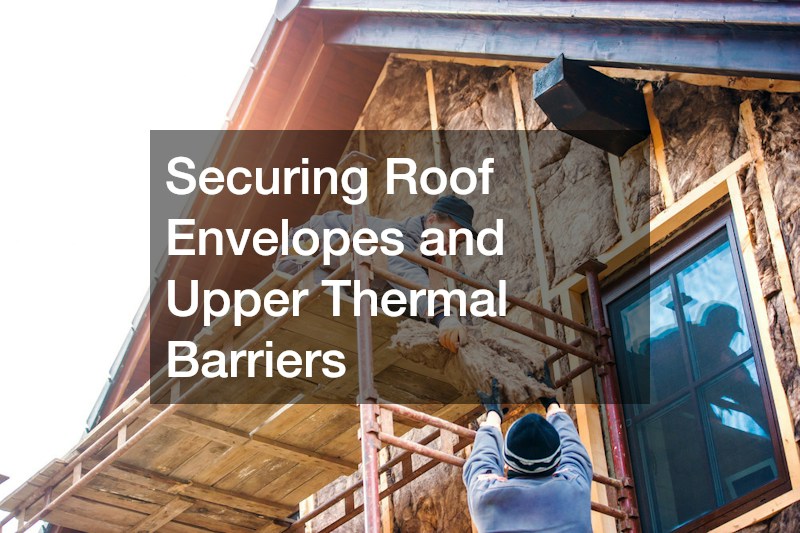
Securing Rafter Baffles and Upgrading Ceiling Thermal Batting
The dynamics of attic airflow play a massive role in maintaining a structurally sound and thermally efficient home during the winter months. When warm, conditioned air escapes through ceiling bypasses into an under-ventilated attic space, it dramatically raises the ambient temperature directly under the roof deck. This escaping heat melts rooftop snow, which then flows down to the unheated eaves and refreezes, creating highly destructive ice dams that force standing water underneath the shingles.
- Measure the existing depth of the upper thermal barrier to ensure it meets modern regional standards, adding blown-in cellulose or unfaced fiberglass rolls directly over the existing layers to compound the thermal resistance.
- Ensure the installation of new ceiling insulation does not inadvertently block soffit intake vents, which would instantly choke the natural convective airflow required to keep the roof deck cold.
- Install rigid polystyrene rafter baffles against the underside of the roof decking to maintain a clear physical channel for exterior air to flow seamlessly from the soffits up to the ridge vents.
Inspecting Chimney Flashing and Valley Decking Against Ice Dams
The physical barrier protecting the home from winter precipitation is only as strong as its weakest penetration point. Relentless freeze-thaw cycles ruthlessly exploit compromised sealant, missing shingles, and deteriorated metalwork, allowing moisture to breach the thermal envelope.
- Conduct a close inspection of the metal step flashing surrounding masonry chimneys, dormers, and skylights, as these are the primary roofline zones where pooling water typically bypasses exterior defenses.
- Identify any curled, loose, or heavily granulated asphalt shingles that leave the underlying protective tar paper and structural wooden decking exposed to direct precipitation.
- Work proactively with licensed roofing contractors to install self-adhering waterproof leak barriers along perimeter eaves, deep structural roof valleys, and vulnerable architectural junctions before heavy snowpack inevitably sets in.
Sealing Infiltration Gaps and Glazing Weaknesses
Sealing Rim Joist Voids and Basement Sill Gaps
The physical phenomenon known as the stack effect continuously compromises residential heating efficiency throughout the winter. As warm, buoyant air naturally rises into the upper floors and escapes through the roof, it creates a persistent negative pressure zone in the lower levels of the house. This pressure differential aggressively pulls freezing exterior air through unsealed foundation perimeters, basement walls, and sill plates, creating a relentless ground-level chill that internal mechanical equipment struggles to overcome.
- Identify and thoroughly caulk exterior penetrations surrounding masonry hose bibbs, electrical conduit entrances, heavy-duty exterior dryer vents, and primary gas line sleeves.
- Bring in a dedicated spray foam insulation service to apply expanding closed-cell polyurethane foam along the interior rim joists, basement headers, and cantilevered floor overhangs to definitively block structural air intrusion.
- Ensure all perimeter sealing creates a continuous, unbroken air barrier that permanently and completely separates the conditioned indoor environment from the freezing exterior foundation walls.
Applying Low-Emissivity Thermal Glazing Films to Repel Radiant Heat Loss
Glass surfaces account for a disproportionately large percentage of residential heat loss in colder climates. Traditional windows readily allow internal warmth to escape through continuous infrared transmission and direct conductive contact with the freezing exterior glass panes, dropping the ambient temperature of any adjacent living areas.
- Utilize modern, spectrally selective surface films that are specifically engineered to bounce long-wave infrared heat back into the living spaces while still allowing full-spectrum natural daylight to enter the home unrestricted.
- Partner with an experienced window tinting service to ensure a flawless, bubble-free, and optically clear application directly to the interior glass surfaces, preventing peeling or clouding over time.
- Leverage these advanced optical coatings to significantly increase the thermal performance and radiant retention of existing double-pane windows without incurring the immense disruption and financial burden of complete architectural window replacement.
Mitigating Ground-Level Heat Sink and Subfloor Drafts

Sealing Baseboard Gaps and Installing High-Density Underlayments
Thermal comfort is heavily dictated by the core temperature of the ground-level surfaces. Perimeter cold air intrusion often goes entirely unnoticed until the deepest, most severe parts of winter. These thermal drafts frequently enter the living space through hidden, localized gaps located between the raw drywall edges and the bottom wooden wall plates concealed entirely behind decorative baseboards. This continuous influx of freezing crawlspace air quickly turns the perimeter floors into massive structural heat sinks.
- Carefully remove baseboards or apply a continuous bead of clear, easily paintable silicone caulk along the entire baseboard-to-floor junction to permanently cut off these hidden draft paths.
- Consult with professional flooring services when undergoing interior renovations or replacing hard surface materials to select and expertly install high-density cork, acoustic felt, or foil-faced thermal underlayments.
- Ensure these specialized thermal barriers are properly fitted tightly underneath floating laminates, luxury vinyl planks, or engineered hardwoods to physically decouple the primary walking surface from the freezing concrete slab or unconditioned basement immediately below.
Anchoring Thermal Area Runners and Tuning Ground-Level Door Sweeps
Surface decoupling does not always require intensive or disruptive renovation projects. Strategic architectural dressing and precise threshold calibration can drastically alter how a specific room retains its ambient heat, actively preventing conductive loss into unheated subterranean zones.
- Deploy thick, densely woven wool area rugs paired closely with heavy rubberized or felt insulating pads over unheated concrete-slab floors and broad ceramic tile surfaces to instantly stop immediate conductive foot-chill.
- Calibrate the adjustable threshold plates located on primary exterior entryways by tightening or loosening the metal sill screws until the door sweep makes firm, highly continuous contact with the metal rail.
- Replace hardened, heavily cracked vinyl door sweeps with flexible silicone alternatives and systematically install heavy-duty magnetic weatherstripping along the vertical jambs of all exterior access doors to fully eliminate structural threshold drafts.
A holistic winterization approach ensures mechanical health, plumbing integrity, and a tightly sealed building envelope support each other to maintain an energy-efficient and comfortable home. If one system is off, others must compensate, causing wear and increased utility costs. Scheduling maintenance in a seasonal timeline prevents emergency repairs during the first hard freeze. Early autumn should focus on airflow and mechanical safety, prioritizing filter changes, burner cleanouts, duct balancing, and exterior window films. As mid-autumn approaches, shift to building envelope tasks, including attic ventilation checks, deep foundation air-sealing, and roof flashing reviews. Just before the first freeze in late autumn, finalize perimeter defenses with exterior plumbing winterization, water heater sediment flushing, and door sweep adjustments. Proactive maintenance of these structural and mechanical components offers immediate benefits through consistent indoor comfort and lower utility bills. Additionally, it prevents catastrophic system failures during harsh winter conditions.