Smart home technology has spent the better part of a decade trapped in a paradigm of reactive convenience. For millions of households, “smart” simply means replacing a wall switch with a smartphone app or using a smart speaker to switch on the living room lamps. While asking an assistant to set a timer or adjust a light setting feels modern, it falls far short of true automation. Voice commands are still manual inputs; they still require a human being to notice a change in the environment, decide on an action, and issue a direct instruction. The ultimate vision of an intelligent living space is not a home that obeys commands, but a home that anticipates needs, operates quietly in the background, and dynamically manages its own complex infrastructure.
1. Upgrading the Electrical Backbone for Machine-Led Automation
Before any home can reliably make its own decisions, it must possess an electrical infrastructure capable of supporting continuous, high-demand automated loads. Legacy residential wiring was designed for basic point-of-use consumption: a switch turns on a light, and an appliance draws power when plugged into an outlet. In an autonomous environment, power distribution must become dynamic, measurable, and intelligent. Automated home engines require real-time telemetry from every electrical circuit to monitor system health, manage energy storage, and shift high-draw operations away from peak utility tariff windows without human intervention.
Modern high-draw loads require intelligent power allocation to prevent breaker trips and optimize localized power generation, such as roof solar arrays or residential battery banks. Integrating a dedicated home EV charger into an autonomous energy management system allows the house to dynamically scale charging amps up or down based on current household consumption, real-time solar production, and localized battery storage levels. If the home detects a sudden spike in appliance activity, it can automatically throttle the vehicle charging rate without dropping the connection or requiring user intervention, maintaining total power demand within safe operational thresholds.
To maintain continuous connectivity across hundreds of sensors and actuators, wireless networks alone are insufficient. Dense smart homes often suffer from radio frequency congestion when relying entirely on wireless protocols like Wi-Fi, Zigbee, or Thread. Establishing robust wiring services throughout the structure creates a reliable, low-latency communication backbone. Running shielded Cat6A or Cat8 Ethernet cables to structured media enclosures allows for Power over Ethernet deployment. PoE can power micro-sensors, smart wall panels, and security nodes directly through data cables, eliminating battery maintenance and ensuring system availability during power outages.
-
Establish localized sub-metering on high-draw circuits to feed real-time wattage draw data into your central automation hub.
-
Isolate sensitive automation hubs, network switches, and edge compute nodes onto dedicated, surge-protected electrical runs.
-
Deploy low-voltage conduit pathways through major walls to simplify future wire pulls and structural expansions.
-
Configure automated load-shedding hierarchies so non-essential devices powered down during utility outages preserve core home functions.
2. Professional Electrical Integration for High-Voltage Control
Bridging machine logic with main voltage distribution requires precise electrical integration. While low-voltage sensors operate at 5V to 24V DC, high-draw appliances, heavy heating modules, and primary lighting circuits operate on 120V or 240V AC lines. Safely interfacing these two worlds demands rigorous adherence to electrical codes, clear load calculations, and expert installation to prevent thermal hazards, neutral line imbalances, or premature component failure.
Calculating continuous and non-continuous loads across multi-phase electrical panels is essential before adding automated switching hardware or motor controllers. Engaging a certified local electrician ensures that total service capacity matches planned expansion, neutral wire pathways are cleanly routed without shared returns, and magnetic interference from heavy-duty conduits does not disrupt nearby low-voltage signal lines. Professional installation guarantees that dry-contact relays, smart contactors, and isolated control modules comply with national safety standards.
Upgrading traditional multi-way light switches to smart, neutral-required relay systems can present challenges in older homes lacking neutral wires at switch boxes. Hiring licensed residential electricians to overhaul legacy switch loops, install neutral-bundled pathways, and retrofit deep gang boxes ensures modern relay modules fit cleanly without line pinching. This foundational upgrade provides a stable hardware layer, allowing ambient light sensors and presence algorithms to control lighting circuits reliably without flickering or signal loss.
-
Verify panel bus bar ratings and available breaker space before adding multi-channel relay modules.
-
Install dedicated neutral conductors to every switch enclosure to support continuous power for solid-state micro-relays.
-
Incorporate whole-home Type 1 and Type 2 surge protection devices at the main breaker panel to safeguard sensitive smart electronics.
-
Label all relay control channels and low-voltage junction boxes meticulously to simplify future maintenance and code compliance checks.
3. Advanced Climate Control Beyond Preset Schedules
Conventional thermostat scheduling is inherently limited. Standard daily schedules assume human life follows rigid timetables, ignoring real-world variances like working from home, traveling, or unseasonal weather shifts. Truly autonomous climate management replaces fixed time blocks with dynamic environmental balancing driven by distributed sensor networks, predictive thermal calculations, and real-time occupancy tracking.
Working with an air conditioning service to implement modern HVAC hardware into local smart home platforms like Home Assistant, Hubitat, or Matter-based controllers requires careful protocol translation. While many appliance manufacturers try to lock users into proprietary cloud applications, autonomous homes rely on local processing for instant response times and offline reliability. Working with qualified HVAC companies allows homeowners to integrate open-source interface modules, decode communicator bus protocols, and set up safe operating boundaries. This guarantees that smart automation commands cannot accidentally trigger short-cycling or exceed operational heat exchanger parameters.
-
Replace motion-activated PIR sensors with millimeter-wave radar sensors to maintain presence detection even when occupants are seated quietly.
-
Deploy motorized, proportional-control supply dampers tied to localized room temperature feedback loops.
-
Automate heat pump variable-stage operation based on real-time electricity costs and hyper-local external temperature data.
-
Establish automated alerts for filter static pressure drops and condensate line overflows to address maintenance issues before equipment fails.
4. Indoor Air Quality and Environmental Health Automation
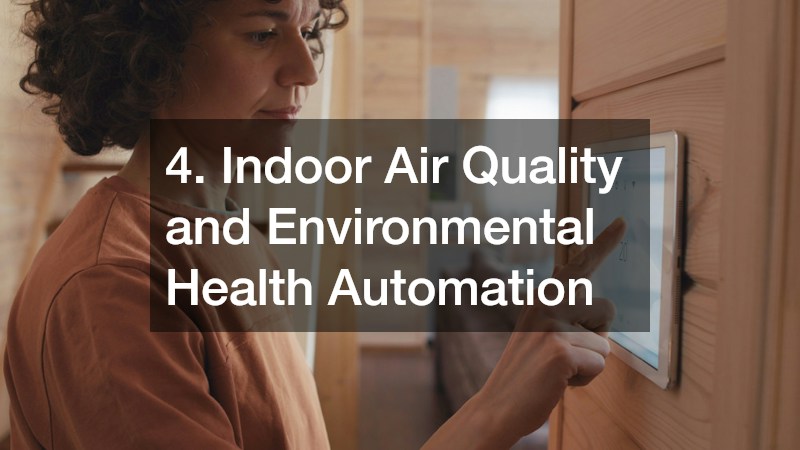
A truly intelligent home ecosystem prioritizes health by continuously optimizing indoor air quality. Modern homes are tightly sealed for energy efficiency, which can trap volatile organic compounds, carbon dioxide, dust, and excess moisture inside the living space. Autonomous environmental management uses specialized air quality sensors to monitor indoor pollutants, dynamically triggering ventilation, filtration, and humidity controls without requiring manual intervention.
Automating ventilation requires continuous balance. When indoor carbon dioxide levels rise during a social gathering, or volatile organic compound levels spike during cooking, the home system can activate Energy Recovery Ventilators or Heat Recovery Ventilators to flush out stale air while preserving indoor temperatures. Integrating motorized window actuators driven by outdoor weather telemetry allows the home to use natural cross-ventilation whenever exterior ambient temperatures and humidity levels are favorable.
Maintaining boiler systems, hydronic radiant loops, and forced-air furnaces requires precise integration with smart controls. Collaborating with an experienced Heating company ensures that multi-stage heating equipment, mixing valves, and automated zone valves operate in sync with intelligent thermostats. Proper hardware integration prevents boiler short-cycling, optimizes condensing furnace efficiency, and keeps hydronic floor systems warm without overshooting target room temperatures.
-
Set up automated ventilation rules that trigger high-rate fresh air exchanges when indoor CO2 levels cross 800 parts per million.
-
Interlock kitchen range hood sensors and bathroom moisture monitoring with supply-air makeup fans to preserve balanced home pressure.
-
Deploy high-MERV or HEPA inline filtration units that automatically increase fan speeds when particulate matter counts rise.
-
Monitor differential pressure across air filters to notify homeowners precisely when replacement is needed, replacing fixed-calendar reminders.
5. Acoustic Intelligence and Contextual Audio Systems
Audio in an autonomous home goes far beyond playing music on command. It functions as an ambient, contextual communication layer that delivers subtle notifications, enhances security, and creates immersive lighting and sound scenes tailored to daily routines. Instead of using loud, jarring alarms or intrusive phone alerts, an intelligent audio framework delivers relevant soundscapes and gentle cues exactly where occupants are located.
Contextual audio routing relies on accurate indoor presence tracking. When an event occurs—such as a visitor arriving at the front gate or a water leak sensor detecting moisture in the utility room—the audio system identifies which rooms are occupied and plays a localized alert tone at an appropriate volume. If an occupant moves from the kitchen to the home office, ongoing media streams or voice announcements can follow seamlessly from room to room, powering down amplification in unoccupied spaces to conserve energy.
Designing a multi-room sound architecture requires clean signal routing, proper speaker placement, and dedicated amplification zones. Installing high-performance audio systems powered by centralized distribution amplifiers ensures reliable, high-fidelity sound throughout the home. Concealing architectural in-ceiling or in-wall speakers within drywall allows sound sources to blend into the home’s design, preserving a clean visual aesthetic while delivering audio coverage to every room.
-
Integrate centralized multi-zone amplifiers with localized network audio streamers controlled via open local Application Programming Interfaces.
-
Set up dynamic volume scaling so notifications adjust automatically based on ambient background noise and time of day.
-
Use directional parametric or architectural boundary speakers to target audio to specific seating areas without sound bleeding into adjacent rooms.
-
Connect real-time safety alerts—such as smoke detection or security breaches—directly into the multi-room audio controller for instant whole-home alerts.
6. Proactive Physical Security and Outer Perimeter Defense
Traditional residential security systems are fundamentally reactive. They wait for a window to break, a door to open, or a motion sensor to trigger before sounding an alarm and contacting a central monitoring station. By the time a traditional alarm trips, an intruder is already inside the home. An autonomous security ecosystem shifts the focus outward, using proactive perimeter monitoring, artificial intelligence, and automated deterrents to identify and turn away intruders before a breach occurs.
Perimeter protection begins at the property boundary. Placing active infrared beams, ground sensors, and outdoor camera arrays along a physical security fence creates an early detection barrier around the grounds. When an object crosses the outer line, edge-AI computer vision engines instantly analyze the video feed to distinguish between wildlife, delivery vehicles, and unauthorized personnel. If a potential threat is detected, the home can respond proactively: illuminating perimeter floodlights, playing dynamic audio warnings, and locking all exterior home doors before anyone reaches the house.
Integrating physical perimeter hardware with local smart home hubs requires low-latency signal pathways. Dry-contact inputs from gate switches, beam-break sensors, and electric strikes should connect directly to local input modules rather than routing through cloud servers. This local processing ensures that perimeter actions occur instantly, preserving physical security even if the home’s main internet connection is disrupted or actively jammed.
-
Combine physical barrier sensors with edge-AI object classification to prevent false triggers caused by passing animals or moving branches.
-
Automate variable landscape lighting responses that brighten specific outdoor zones when motion is detected along boundary lines.
-
Integrate automated gate latch locks with physical access controls, allowing authorized access via encrypted local keyfobs or biometrics.
-
Configure automated privacy modes that disable interior cameras while maintaining full exterior perimeter monitoring when occupants are home.
7. Synchronized Emergency Safety Protocols
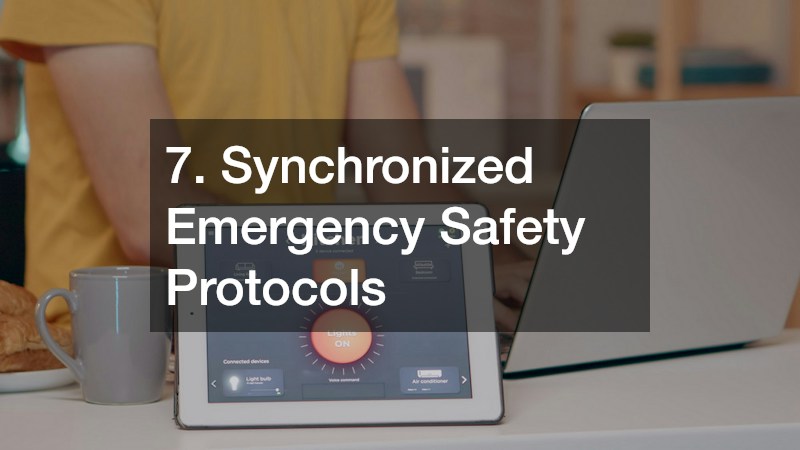
An autonomous ecosystem shines brightest during critical emergencies. When life-safety hazards occur—such as fires, carbon monoxide leaks, structural water leaks, or severe weather events—human response times can be slowed by panic, confusion, or sleep. An intelligent home system can execute complex, pre-programmed safety routines in milliseconds, protecting occupants and minimizing structural damage.
During a fire, standard HVAC forced-air systems can accidentally spread toxic smoke throughout a house within seconds. An autonomous home prevents this by linking smart smoke detectors directly to the climate engine. If smoke is detected in any room, the system immediately shuts down all air handler fans, closes motorized fire dampers, and stops fresh air intakes. Simultaneously, the system can turn on pathway lighting at full brightness, unlock exterior doors for easy escape, and flash outdoor entryway lights to guide emergency responders to the property.
Water damage is another major hazard that benefits from autonomous intervention. Installing point-of-use leak sensors near water heaters, washing machines, and sink drains—combined with an ultrasonic flow meter on the main supply line—allows the home to identify abnormal flow rates instantly. If a pipe bursts or an appliance leaks, the main smart shutoff valve closes automatically within seconds, and power to nearby appliances is cut to prevent electrical short circuits.
Maintaining mechanical ventilation systems, fire safety dampers, and pressure-balancing equipment requires periodic professional inspection. Scheduling routine checkups with a dependable local HVAC service keeps mechanical dampers, ductwork, and sensor interlocks clean, functional, and ready to respond during an emergency. Regular maintenance guarantees that emergency shutoff routines execute reliably when needed.
-
Connect smart smoke and carbon monoxide detectors to a central controller via hardwired connections or dedicated local wireless protocols.
-
Install an automated, motorized main water shutoff valve directly downstream from the utility meter.
-
Program emergency egress scenes that automatically lift window shades, illuminate hallway floor paths, and unlock exterior doors during fire alarms.
-
Configure backup power routing to ensure safety hubs, perimeter locks, and critical sensor networks remain fully functional during grid outages.
8. Preserving Local Control, System Redundancy, and Privacy
As homes become more autonomous, keeping control local becomes critical. Relying on cloud-based smart home platforms creates significant vulnerabilities: vendor outages can disable basic home functions, corporate service shutdowns can render hardware obsolete, and internet disruptions can break essential automation routines. Furthermore, sending constant internal sensor data, video streams, and presence logs to remote cloud servers creates serious privacy risks.
A truly autonomous home ecosystem should be built around local edge processing. Core home routines—such as lighting automation, climate loops, access control, and safety interlocks—must execute locally on dedicated hardware located inside the residence. Platforms like Home Assistant, Hubitat, or dedicated industrial programmable logic controllers (PLCs) process sensor data locally, providing millisecond response times, complete operational privacy, and total independence from internet access.
System redundancy is equally important. Automation logic should enhance manual controls, never replace them completely. Every automated switch, valve, and motor should retain a physical, mechanical override. If a main edge server ever fails, occupants must still be able to turn on lights with wall switches, adjust temperature settings manually, and open doors with traditional keys. Designing hardware layers with manual fallbacks prevents minor system glitches from turning into household disruptions.
-
Select smart home hardware that supports local APIs, open standards (such as Matter over Thread), or local wireless mesh protocols (such as Z-Wave Long Range).
-
Isolate smart home devices onto a separate Virtual Local Area Network (VLAN) without access to the outside internet to block unauthorized remote access.
-
Use local storage arrays (NAS) with encrypted drives for security camera recording instead of cloud subscription services.
-
Maintain a current off-line configuration backup of your central automation hub to allow fast recovery if local hardware ever fails.
9. Designing Seamless Human-System Interfaces
Achieving true home autonomy does not mean removing human control entirely; it means transforming how humans interact with their living space. The goal is to eliminate unnecessary micro-management—like turning switches on and off or adjusting dials throughout the day—while providing clear, intuitive ways to adjust system behavior when user preferences change.
Presence-based micro-interactions offer a smooth way to personalize room behavior. Instead of relying on voice commands or phone apps, the home can identify who is in a room using encrypted Bluetooth low-energy signals, smart floor pressure mats, or wearable tags. The system can then instantly adjust light brightness, desk heights, or background music to match that specific person’s saved preferences, creating a tailored environment automatically.
-
Replace wall-switch banks with multi-button keypads that feature custom-engraved labels for intuitive control.
-
Deploy low-power e-paper wall displays for room status information to reduce unwanted screens and light pollution throughout the home.
-
Set up contextual long-press button actions (such as holding an exit button to turn off a room completely and arm its security zone).
-
Design user interface dashboards around high-level home status monitoring rather than cluttering screens with individual device switches.
10. Implementation Roadmap for an Autonomous Home
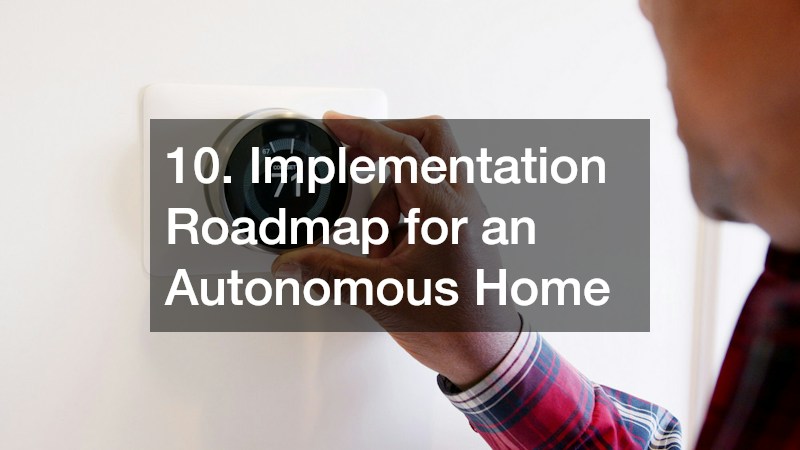
Building a machine-led, autonomous home is a journey best approached in planned stages rather than all at once. Attempting to automate an entire house simultaneously can easily lead to setup errors, system conflicts, and user frustration. Following a structured implementation roadmap allows you to build a stable foundation, test core routines thoroughly, and expand system capabilities over time.
The smart home of the future is not defined by how many voice assistants line your countertops or how many apps fill your phone screen. True autonomy is marked by invisible, intelligent support—a living space that manages its own energy demands, maintains ideal air quality, adjusts room comfort, and protects its perimeter quietly in the background.
By upgrading foundational electrical systems, establishing resilient local processing, integrating professional mechanical equipment, and layering presence sensors, you transform your house from a collection of isolated gadgets into a cohesive, self-orchestrating ecosystem. Moving beyond simple voice commands brings us to the real goal of home automation: a space that works continuously for you, delivering effortless comfort, security, and efficiency every day.